I actually like Microsoft Windows. It provides a reasonably intuitive interface so that non-techies can harness the incredible -- and ever-increasing -- power of a computer, which is probably the most useful productivity tool in the world today. Everyone knows the software empire that is Microsoft, and Windows has been the flagship product driving its success for years. But boy, how things change...
True, on the desktop, Windows 7 still ranks as the top operating system with 44.85-percent of all PC users, followed by the still popular Windows XP with 37.74-percent. Vista—yes the never-loved Vista—comes in at third with 4.51 percent. Despite the fact that finding and buying Windows 7 PCs has become increasingly more expensive and difficult, just try finding one in a retail store, Windows 8 share is growing but still comes in last at 4.27 percent.
Let's dissect this info a little bit. Personally, I would disagree with a couple things here.
I don't think that smartphones and tablets should be considered in the same class of computing device as desktops and notebooks. They've come a long way over the past 3-5 years, yes, but they're not fully capable replacements (yet). They lack the sheer computing power, the upgradeability, and the vast array of connectivity that is essential for functioning in today's office environment. They're terrific peripheral devices that allow easy portable access to everything you could need on your main system...which is still a desktop or laptop. Every few months a new tech blogger tries to use only a smartphone or tablet to do his job for a period of time, and documents the experience. Invariably, they figure out a way to brute force their way through with a mish-mashed amalgamation of products and services, but that sort of experiment is really not possible in a corporate environment with thousands of users and a finite IT support staff. Aside from the problematic hurdles in simply getting everything working, there's still the question of full functionality. When there's a tablet that has 1TB of storage space and is capable of driving the graphics for dual monitors, as well as allowing a user to perform a memory upgrade in less than 2 minutes, then we'll talk about being in the same space as a desktop or laptop. Until then, I think they should be considered separate technology segments.
That being said, I think this article still paints a pretty dismal picture for Windows. Not only has the adoption rate been abysmal, but it's actually getting worse as time goes on. I'll let you read the whole article for the full scoop, but the bottom line is that Windows 8 has been rejected by pretty much everyone. Microsoft fanboys (yes, they do exist) will boldly proclaim that Microsoft has sold well over 60 million licenses, blah blah blah. That's an argument that is as simplistic as it is irrelevant. I know my company has purchased thousands of licenses from Microsoft that allow the installation of Win8...or Win7. I can assure you they're not installing Win8. Not only is the ridiculous UI change going to be a support nightmare -- "Where's the Start button?!" "Where did my programs go??" "How do I print??" -- but it hasn't been all that long since we finished rolling out Win7, and there's no way they're moving on anytime soon. But they still have to be prepared for the future from a licensing perspective. I'm guessing most large corporations are following much the same pattern - buying licenses all the time, but not actually using them until it's beneficial (or necessary, as in the exit of Windows XP). The number of licenses sold is an empty shell of an argument. You could also look at it this way - how many people do you know who are using Win8? I can think of only one, but that's on a tablet rather than a "real" computer.
And that brings us to another argument. Win8 is supposedly a really good experience on touch screens. Emphasis on the supposedly. If it really was for most people, then Windows 8 smartphones and tablets would be going like gangbusters. Instead, the pathetic adoption rate of desktops and laptops actually towers above the adoption rate of smartphones and tablets. And there's still the nagging little problem of having to replace tens of millions of monitors on the desk of every corporate environment and home office in order to take advantage of it, and that is not a cheap or fast process. The idea of a unifying platform for all devices is certainly good (and we'll probably get there eventually), but it's not there yet, as the Windows experiment demonstrates in spades.
Also, did I mention the customer experience disaster that is Windows 8? Just go look on YouTube and you'll find more videos documenting how horrible Win8 is than you can shake a memory stick at. It's counter-intuitive in many respects, and the interface is even worse than that of iOS. Sure, there are a handful of people who love it...but most don't. Like iOS, there's little customization that can be done to it, but iOS is far more polished in terms of a slick-looking and seamless visualization, so without customization all you have is a bunch of solid colored blocks cluttering up your screen. What's that about real-time updates? Big deal. Android has these things called widgets that give you real-time information in a vast array of configurable and customizable tools that give you everything you could possibly imagine, but in a theme and/or design that looks damn good and fits with the smartphone environment of your choice. Win8 falls short again. In fact, several hardware manufacturers have publicly blamed Win8 for the roughly 14% decline of PC sales over the past year, though the changing nature of what exactly constitutes a "PC" does obscure the field quite a bit. Regardless, Win8 is clearly a loser in terms of market success. There's been some recent signs of hope with the 8.1 upgrade, but even that is too little too late, I think.
So here's my take on what's going on.
Touchscreens are where the industry is going, and the blending of "PC" and "tablet" is only going to continue. Microsoft is right about going for a single unifying experience, they just did an atrocious job of it on their first attempt. But let's be honest - any time you have that radical a change to something people use daily, it's going to cause some waves, especially with users who don't understand the difference between a hard drive and the tower, or who can't figure out when their monitor is simply turned off. That's different than what Win8 has done, though - it's frustrating and annoying savvy, technically proficient power users, leading me to believe that any realistic chance of rolling out to the mass public or corporate America is slim to none because of the literal nightmare that would ensue for IT departments everywhere. This is not unprecedented, though. Vista was such a terrible release that almost no one actually used it in the corporate space, and people got away from it as quickly as they could in the consumer space. It is not normal for a desktop operating system to be supported for 15+ years, but the mass rejection of Vista is what prompted XP to have such a long and successful run. If you look at Microsoft's history, you see a pattern developing:
Win 3.1 - great
Win95 - decent
Win98 - great
Millennium - awful
XP - great
Vista - awful
Win7 - great
Win8 - awful
I can't imagine it's intentional, but it sure seems like they alternate between great success and great failure. Does it just take that long to really build all the necessary features into a release and get them working properly? Do they not pay enough attention to their user base until too late in their development process? Do they want to let their good releases linger for as long as possible in order to really lock up the segment? Something else? I have no idea, but this is the pattern we see. So, in the context of Win8, here's what I think happened.
Microsoft knows the industry trend is toward touchscreens. They know they have a lock on the desktop/laptop OS segment. They know that a unified environment will eventually be the ace in the hole (think about how both Apple and Google have worked long and hard to create an ecosystem where all your content is provided by one unified platform for all your services). They know Win7 is highly regarded, and they're due for another clunker release. They know the number of touchscreens in both the consumer and commercial space is vanishingly small. In short, they can't possibly succeed right now with Win8. Thus, I think they're positioning themselves for Win9, and threw Win8 to the wolves from day one.
And really, it's not that bad an idea. What better beta test can they run than actually releasing it and getting real feedback from real customers over the course of several years? They're still making a ton of money off of it from those purchased licenses, and they already own the only viable alternative (Win7) if people don't like it. Where's the down side? Some negative press, sure, but Microsoft is hardly a stranger to negative press, and raking in billions of dollars a year is a pretty soothing balm for negative press. In reality, they've just bought themselves a few more years to really refine and develop the unified Windows platform into something that will be polished, comprehensive, and an ecosystem capable of going toe to toe with Apple and Google. They have a ton of work to do to get there, of course, but that's the only thing that makes sense to me.
You've no doubt heard about the Darwin Awards, a "prize" for people who cause their own demises in the dumbest ways possible. It's definitely an award you don't want in your trophy case. Surprisingly, there are a lot of awards out there that you don't want your name attached to. Here are nine of them.
1. THE BOOKSELLER/DIAGRAM PRIZE FOR ODDEST TITLE OF THE YEAR
A literary award, the Diagram Prize (above) is exactly what it sounds like. I think you'll agree that the 2013 winner is definitely deserving of the honor: Goblinproofing One's Chicken Coop.Goblinproofing faced stiff competition from God's Doodle: The Life and Times of the Penisand How Tea Cosies Changed the World.
2. BAD SEX IN FICTION AWARD
Presented by the Literary Review every year since 1993, the BSFA is bestowed upon authors who have written overly flowery or otherwise ridiculous sex scenes. The 2012 "winner" was Nancy Huston, author of Infrared. An excerpt:
"Kamal and I are totally immersed in flesh, that archaic kingdom that brings forth tears and terrors, nightmares, babies and bedazzlements. The word pleasure is far too weak for what transpires there. So is the word bliss."
Remember way back in 1992 when a woman sued McDonald's because they didn't warn her that her coffee would be hot? This award for "outrageous and frivolous lawsuits" is named after her. The awards are on indefinite hiatus right now, but here's how the most recent Stella recipient won:
"Roy L. Pearson Jr. The 57-year-old Administrative Law Judge from Washington DC claims that a dry cleaner lost a pair of his pants, so he sued the mom-and-pop business for $65,462,500. That's right: more than $65 million for one pair of pants. Representing himself, Judge Pearson cried in court over the loss of his pants, whining that there certainly isn't a more compelling case in the District archives. But the Superior Court judge wasn't moved: he called the case 'vexatious litigation", scolded Judge Pearson for his 'bad faith,' and awarded damages to the dry cleaners. But Pearson didn't take no for an answer: he's appealing the decision. And he has plenty of time on his hands, since he was dismissed from his job. Last we heard, Pearson's appeal is still pending."
4. THE BULWER-LYTTON FICTION CONTEST
The English Department at San Jose State University sponsors this contest to deliberately write the worst opening sentence to a novel. (Since it's deliberate, it probably wouldn't be too awful to win this one.) The 2012 winner was Cathy Bryant of Manchester, England, who wrote:
"As he told her that he loved her she gazed into his eyes, wondering, as she noted the infestation of eyelash mites, the tiny deodicids burrowing into his follicles to eat the greasy sebum therein, each female laying up to 25 eggs in a single follicle, causing inflammation, whether the eyes are truly the windows of the soul; and, if so, his soul needed regrouting."
The contest is named after Edward George Bulwer-Lytton, the author of the famous "It was a dark and stormy night" line. There's more to that line, though. The whole thing goes a little something like this: "It was a dark and stormy night; the rain fell in torrents—except at occasional intervals, when it was checked by a violent gust of wind, which swept up the streets (for it is in London that our scene lies), rattling along the housetops, and fiercely agitating the scanty flame of the lamps that struggled against the darkness."
5. THE FOOT IN MOUTH AWARD
Though you'd probably like to nominate someone you know for this honor, the Plain English Campaign awards the Foot in Mouth to a public figure who has made a baffling comment in the last year. Mitt Romney won in 2012, for statements such as "I believe in an America where millions of Americans believe in an America that's the America millions of Americans believe in. That's the America I love."
As opposed to the Nobel Prize, which is typically awarded for momentous achievements, the Ig Nobel is given for rather insignificant accomplishments. Winners for 2012 included the authors of a study entitled "Leaning to the Left Makes the Eiffel Tower Seem Smaller," and the U.S. Government General Accountability Office, "for issuing a report about reports about reports that recommends the preparation of a report about the report about reports about reports."
7. PIGASUS AWARD
If you've ever doubted that people can bend spoons with their minds or contact long-dead loved ones, then you'll love the Pigasus Award. Skeptic James Randi founded the award in 1979 and gives it to parapsychological, paranormal or psychic frauds almost annually on April 1. One of this year's big winners:
"Houston biochemist and physician Stanislaw Burzynski, who sells expensive cancer 'cures' by administering 'antineoplastons,' costing his customers tens of thousands of dollars, and which have never been shown to be efficacious in controlled trials. His cancer therapy is not FDA approved. Despite his many customers to whom he sells his so-called 'cancer cure,' he has never published the final results of a single clinical trial. The FDA has sent his clinic warning letters about their unsafe research methods and is currently investigating possible violations of rules meant to protect research subjects, including children."
8. THE ERNIE AWARDS
A crowd of 400 Australian women gather every year to hear the nominees of the Ernie Awards, a recognition of the most misogynist statements. The statement that is booed the most "wins." A recent winner was prominent Australian law firm Clayton Utz, which released a statement saying of the female partners in the firm: "Certainly they are all females but each of them are extremely competent lawyers."
The awards are named after Australian Workers' Union official Ernie Ecob, who was known for saying things such as, "Women aren't welcome in the [sheep] shearing sheds. They're only after the sex."
Since 1980, the Golden Raspberry Awards have served as a counterpart to the Academy Awards. Instead of being honored for excellence, the Razzies are awarded to people in the film industry who gave absolutely awful performances. The Twilight Saga: Breaking Dawn - Part 2 nearly swept the Razzies this year, winning in the categories of Worst Picture, Worst Actress, Worst Supporting Actor, Worst Screen Couple, Worst Sequel, Worst Director, and Worst Screen Ensemble.
I think all of those awards are very, very justified...
Oh yes, oh yes, oh yes!!! I'm not in the market, of course, but these look fantastic:
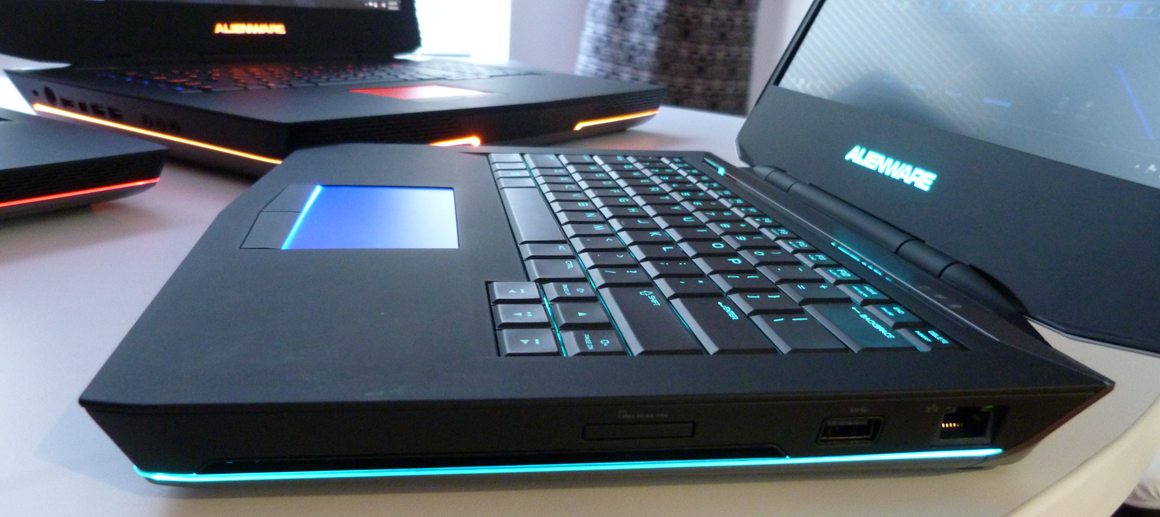
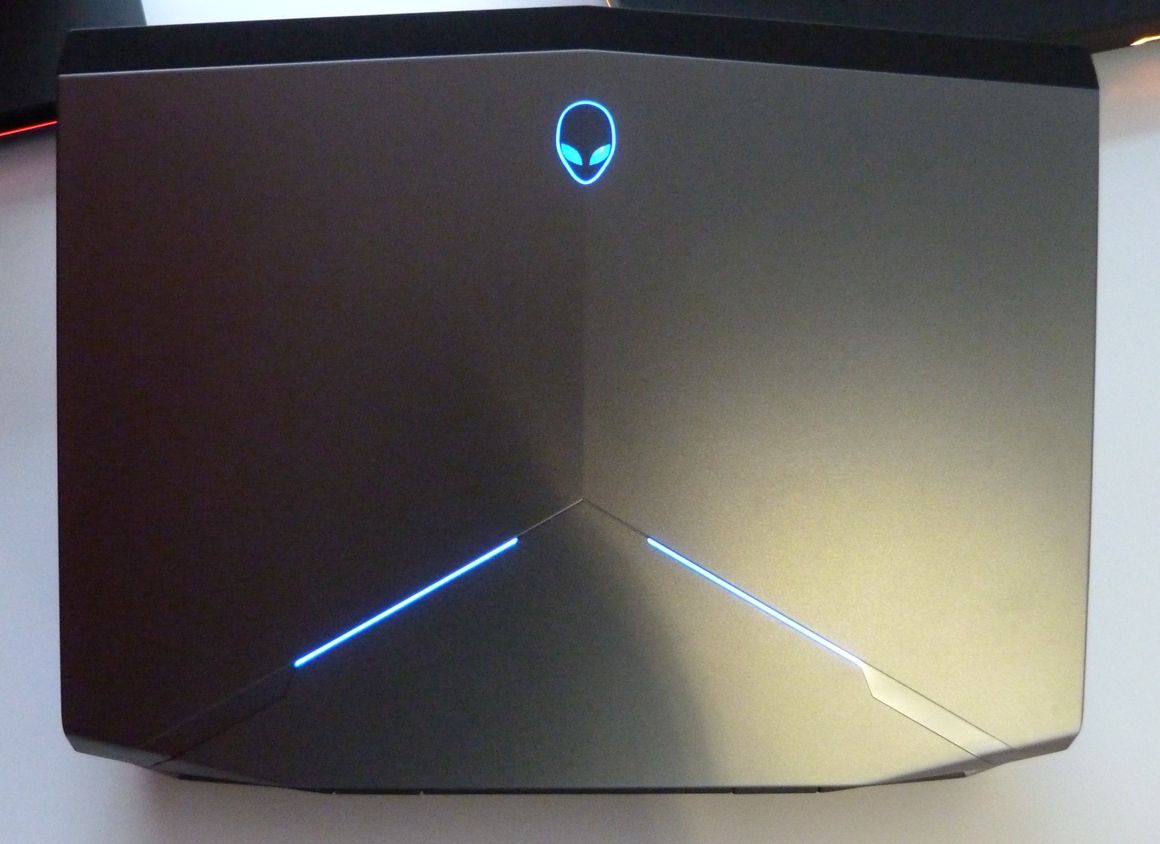
If there’s one thing Dell has done right over the years, it’s been to let Alienware—the boutique gaming PC manufacturer Dell acquired in 2006—remain Alienware. Based on the new notebook lineup that Alienware unveiled tonight, that let-‘em-be strategy is still working.
As the annual gaming/marketing orgy known as the E3 Expo
gets underway, the company announced three brand-new notebook models
based on Intel’s fourth-generation Core processors. But Alienware
General Manager Frank Azor dropped by PCWorld’s offices late last month
to give us a hands-on sneak peek. The lineup has undergone a significant
makeover while managing to remain unmistakably Alienware.
"It’ s a big departure from 2009,” said Azor. “The new models are 60
percent metal, including a 100-percent aluminum A panel [lid] and a
magnesium alloy chassis.” The reduction in plastic composites is a
welcome departure, but the most significant visual cues come in the form
of LED light pipes gracing the lid and the front and sides of the body,
and the backlit trackpad.
Between those, the alien-head logo, and the backlit keyboard, each
notebook has 10 distinct lighting zones that can be lit in any
combination of colors from a palette of 20. Games that support the
AlienFX utility can change these color combos in response to in-game
events, such as taking damage, healing, or completing a mission or
quest.
Here are a few more things that set Alienware apart from most other brands:
Alienware allows its customers to open up and upgrade their notebook,
and they can overclock the CPU—both without fear of violating the
manufacturer’s warranty. ...
Azor said that people often ask why Alienware’s notebooks are so thick.
“It’s because we don’t share performance among components,” he said.
“Every part can run at its full TDP (thermal design power). A lot of
manufacturers will throttle down the GPU when the CPU ramps up, and vice
versa, thinking only one component needs to run full out at once. Our
notebooks can run everything full tilt without anything needing to back
off.”
... the 17- and 18-inch notebooks also have an HDMI input,
so you can connect a game console or a smartphone and use the
notebook’s larger display. ...
All three models will also come with a new dynamic performance
optimizer—dubbed Accelerator—that can turn off Windows services that
aren’t essential to gameplay, freeing up system resources for the game.
Once you exit the game, Accelerator automatically turns these services
back on. ...
I won't go into the details of the specs on these beasties, but you can hit the link for all the gorgeous details. Let's just leave it at these beautiful pictures...
As I've become and old boring fogie, I've really learned to appreciate many more forms of human ingenuity and excellence, even when they come in subjects in which I don't have any particular interest. For example...juggling. I've never been a juggler, I don't really care about juggling, and it's never been that interesting to me. And yet, when I see something like Michael Moschen doing The Triangle, I am absolutely blown away by the sheer human excellence on display. Incredible!
It is now my great pleasure, graduates, to welcome you to the Real World – a world that is quite different from the Real World my own classmates and I first encountered a few decades ago.
When we graduated, finding a job and earning a salary was pretty much the only way to go. But today such jobs are no longer so easy to find. In fact, the data shows that by 2020 more people in the United States will be working for themselves than are drawing salaries, with most of the salaried employees being older, and most of the self-employed younger.
And then there are all the changes brought on by computerization. As highly interconnected and computerized as we are today, by the time you young graduates reach retirement age you'll be roughly a million times more interconnected and computerized. And what is it that computers do? They solve problems, that's what. They solve any kind of technical or mechanical problem involved in creating the things that have economic value. So the more computer power we have – and we have twice as much of it every 18 months or so – the more problems computers will be capable of solving.
In fact, if you can state something as a technical problem that has a solution – a task to be completed – then eventually this problem can and will be solved by computer:
It shouldn't be a mystery where all the salaried jobs have gone, because problem-solving jobs like these – jobs that pay perfectly good wages to human beings, or at least used to – are virtually all being automated away. It's not a question of whether enough computer power will be available to solve these problems, only of when.
There are only two ways to "beat the clock" against the kind of galloping automation already consuming so many jobs. One way is to become very good at dealing with interpersonal issues – people skills. We are all much more interconnected, and our economic activities are more and more interdependent. So resolving the people-to-people issues that plague organizations and groups of cooperating people is a skill that is likely never to go out of style, and it's obviously beyond the capabilities of any conceivable computer.
The other way to beat the clock is not to focus on solving problems but on discovering them. Discovering new problems is something that computers can't really do, and are unlikely to be able to do in your lifetime. Discovering new problems is otherwise known as "creativity." Andcreativity, graduates, is one of the most important keys to generating economic value. By its very definition, creativity involves solving a problem that wasn't there before.
Maintaining a creative and open-minded outlook and relating well with other people are likely to be extremely important skills in whatever career path you choose, bar none.
Launch a business on your own, even as a free-lancer, and you won't be able to land a customer until you've discovered some problem you can solve better than a computer, and you have enough interpersonal skills to convince someone else that you can.
If you go into sales, your prospect will be able to use computer power to solve the problem of evaluating your product's capabilities, but you'll still be able to generate value if you can converse with her in such a way as to discover new problems to solve.
Go into finance, and your computer will solve the problem of making profitable trades based on trends and probabilities, but you can generate value yourself by thinking creatively about financial problems that haven't yet been solved.
If you go into teaching, computers will take over more and more of the problem of basic instruction, but you'll still be able to generate value as long as you can come up with new pedagogical perspectives, or you can creatively improve a student's performance through your personal relationship.
Even if you're graduating pre-med, you won't be able to generate economic value for long simply by solving the problem of operating a scalpel or interpreting a CAT scan. Rather, you'll need to discover new problems, perhaps by doing research, or perhaps simply by listening more creatively to a patient's own description of her symptoms, human to human.
Gosh, I just wish I were your age! What a marvelous time it is to be alive, and to be joining an economic system that prizes originality over conformity, and relationships over transactions. It truly is a wonderful future you face, even though it will be radically different from the future my colleagues and I faced when we were your age.
There is one more extremely important piece of Real World advice I need to leave you with, however. Technology is advancing so rapidly that things have become a lot less predictable than they used to be. No matter how good you are at discovering new problems to solve and relating to people, there will be ups and downs, bonanzas and disasters, that you simply cannot anticipate. No one could.
So how do you prepare for such unpredictability? How do you increase your chances of success, and remain resilient in the face of the occasional reversal? There is only one sure-fire way to prepare for such a changing world, and it is one of the most time-tested, old-fashioned ideas known:
Always be trustworthy to others.
Live your life in such a way that others can trust you. Do this, and you'll find that others will come to your defense when you need defending. Others will want you to succeed. It won't insulate you from failure, but it will make failures more tolerable, and recovery more achievable.
Technologies may come and go, problems to solve and the business models required to solve them may appear and disappear, but having the trust of your friends and colleagues – that is a genuinely timeless asset.
And, you'll be happier. You can trust me on this.
Hm. Obviously, I am in total agreement on the trustworthy thing, but I think he really hits on some important concepts. As fast as things move nowadays, no amount of school or training will ever adequately prepare you to succeed in the Real World. I'm becoming more and more convinced that the single biggest purpose for going to school is nothing more (or less) than to learn how to learn. This one critical piece of knowledge will enable you to confidently take on new challenges, new tasks, and new responsibilities with the reasonable expectation of success. You will never know everything you need to know for any job; you will rarely know even a relatively large chunk of what you need to know for any job. But, if you know how to learn what is needed, you can succeed in just about anything.
Just my opinion, of course, but Mr. Peppers seems to agree. Good company, I'd say.
The first one possessed introspection and heart, this one attempts to contain the explosive action. Both are tremendous, and the prospects of this movie just keep getting better and better...!
We hear so much about the disparity between the haves and the have-nots nowadays. Who's got "enough" or "too much" or deserves more of "their fair share" and all that. I've addressed the notion of income inequality before (here and here), but that's not the point of this post. I merely want to share a way to gain some perspective on how how bad any of us really have it here in the US in the 21st century. Despite the economic implosion and continuing recession since 2008, despite the horrendous (and horrendously mis-reported) unemployment rate, and despite the economic disaster of the last five years (ahem)...we are still so incredibly wealthy as a nation compared to the rest of the world!
Check out the Global Rich List and see how you stack up against the rest of the world. It's simple - just enter the currency you use and your annual income and click the button, and you'll see where you land on the scale of the roughly 7 billion people living on the planet.
Pretty astounding, isn't it?
But it's not just you...it's all of us. The median US household income -- meaning, if you were to line up all of the incomes in the nation in order of most to least, and then pick the one squarely in the middle of that line -- was roughly $45,000 in 2012. That income lands in the top .37% of the wealthiest people in the world. In fact, you'd have to make less than $31,100 to drop out of the global top 1%, and the official poverty line in the US -- around $23,000 -- still looks pretty awesome in the top 2.25% globally.
So, the next time you find yourself whining and moaning about the "1%ers" who have so much wealth and how unfair it is, just remember that on a global scale...that's you. Then stop and think about how you might possibly be able to help someone else out who has far, far less than you. Obviously, there are plenty of people out there who desperately need the help, and in a relative sense you have the means to provide it to them.
Not only will you help alleviate a genuine problem in the world, but you'll also suddenly find yourself more thankful for what you do have.
When I was growing up, my parents would tell me about all the ancient
technologies they had to use in their youth. Whether it was a car with a
manual choke, a phone that required you to ask an operator to connect
you, or a record player with a hand crank, mom and dad experienced a ton
of tech frustrations I would never know.
As my 1-year-old
upgrades his speech capability, I expect to tell him about these 10
awesome tech frustrations that he'll never experience. I hope he feels
sorry for me, at least a little bit. ...
Glacially Slow Dial-Up Internet
I've
been using cable Internet since 1999, but I'll never forget the
excitement of dial-up Internet. Barring a broadband apocalypse, my son
will be able to count on boringly consistent connectivity throughout his
life. Dial- up was like a box of chocolates; you never knew what you
were going to get.
Listening to the modem dial was like watching a
croupier spin the roulette wheel. I'd hold my breath as it punched the
final number. Would I get a busy signal, or would it just keep ringing
until I hit the cancel button and tried again? Even when my ISP's modem
picked up, I was on pins and needles for at least 30 seconds while I
heard the familiar "boing, boing, bing" of its handshaking process. In
the end, I could come out a winner with a speedy 56K connection or take
the penny prize with a 14.4 Kbps rate that took 10 minutes to download a
single photo.
Flimsy Floppy Disks
These
days, you have to work pretty hard to lose your work. Everything my son
writes, from his first scribbles to his college term papers, will be
preserved in the cloud for his great- grandchildren to see.
When I
was growing up, we had flimsy 5.25-inch floppy disks to save our data.
Unlike today's flash drives that survive 30 minutes under water, these
fallible floppies could fall victim to magnets, heat or even overuse.
Even better, it took a good very long time to save a document, making
you less likely to write to disk while you worked.
Germ-Ridden Pay Phones
Throughout
his life, my son will never be out of pocket, because he'll always have
a phone or some communication device with him. However, when I was
growing up, the only way to reach out and touch someone from the road
was to use a payphone.
These days, you'll have an easier time
finding a drive-in movie theater than a working payphone — and for good
reason. The ear pieces on these contagion kiosks were about as sanitary
as a public toilet seat that hadn't been cleaned in years. Even worse, I
never had the right amount of change, so I had to use a pricey calling
card. Remember those?
Ambiguous Pager Messages
By
the time my son is in kindergarten, he'll probably be wearing a headset
that beams full emails into his retina while he walks around. But his
father was excited to get an alpha numeric pager that buzzed with a
caller's phone number.
Unfortunately, when you received a page,
you often didn't know whose number it was and what that person wanted
until you returned the call. I can't tell you how many times I ran to
the nearest payphone just to call back telemarketers or strangers who
paged the wrong number.
Renting and Rewinding a VHS Tape
When
I sit down on the couch with my son and show him all my favorite
movies, they'll be streaming from the cloud right to our tablet or TV.
So he'll spray milk from his nose when I tell him about how we used to
rent VHS tapes from a store.
When you think about it, every
single aspect of the video- rental process was an exercise in
frustration. First, you had to drive to the store and hope it still had
available copies of the movie you wanted, but more often than not, you'd
come for "Pearl Harbor" and settle for "Pootie Tang." You then had 24
hours to watch the film and bring it back fully rewound or risk painful
penalties. I'll never forget standing in front of my VCR rooting for it
to rewind the tape more quickly so I could speed out to Blockbuster in
an ice storm and get it there by 11:59 p.m.
Dot Matrix Printing
If
and when my son actually needs to output something to paper, the inkjet
will print it in full color on a glossy piece of paper within a minute
or so. If he needs more paper, he'll just load regular 8.5- x 11-inch
pages into a tray and be done.
He'll never have the same sense of
satisfaction I experienced after finally aligning the holes on my ream
of paper with the sprockets on my dot matrix printer and waiting 20
minutes for it to print 10 pages of black-and-white text. The printing
process was so slow and painful that teenage girls could use "I need to
print tonight" as an excuse to get out of a date instead of classics
like "I need to dry my hair" or "something suddenly came up."
Writing in Palm Graffiti
Today's
best software is like a pair of comfortable shoes; it adapts to the
user's existing preferences over time. My son's first computer, phone
and tablet will undoubtedly learn from him, predicting the next word
he'll type or song he'll listen to, based on his previous activity.
Growing
up in a world where personalization is king, my kid will be surprised
to hear that there was once a device that forced you to learn an
entirely new alphabet just to enter text. An entire generation of PalmOS
PDAs required you to write in Graffiti, a synthetic alphabet that was
designed to make it easy for the device to read your scribbles.
Dithered Web Graphics
If
my son sees a picture that has a limited color pallette, it'll be on
Instagram. Back when the Web was new, however, a lot of video cards and
color monitors could show only 256 different colors (8-bit color) on
screen at once.
With 8-bit color, photos appeared grainy because
the computer had to use dithering technology to approximate more colors
than it could actually show at once. Even the desktop wallpaper and
icons in Windows looked pixilated when used in 8-bit color mode. When I
finally got a 16-bit video card, the entire Internet looked different.
Adjusting the Rabbit Ears on Your TV
Whether
it's a streaming video from the Internet or an HD channel on cable TV,
the videos my son watches all appear at the press of a button. On the
rare occasion that he has to wait for buffering or the picture freezes,
there's not a lot anyone can do about it.
When I tell him that I
grew up poking and prodding the rabbit-ear antennas on top of the TV
just to get a decent picture, he'll throw his sippy cup across the room.
Unfortunately, for decades before cable and digital TV, everyone had to
get up from the couch and periodically fiddle with the TV antennas,
because the picture would suddenly get wonky. A whole generation of
children were charged with this task.
Developing a Photo
If
my son wants to take a picture of something, all he needs to do is
point his smartphone, tablet, digital camera or webcam at the object and
click a button. In about a second, he'll have a completed digital image
he can edit, print or share with the world.
When his dad was
growing up, most pictures were taken on film cameras with two dozen
shots per roll and no ability to see them until they were developed.
Sometimes, it would be weeks or months before you finished a roll and
had it developed. Even Polaroid pictures took several minutes to appear.
By that time, if someone had red eye or was looking away in a shot, it
was too late to capture another image.
I have no idea if these are actually true, but given how humanity behaves under stress, I'm inclined to believe they are. Regardless...enjoy!
These are from a book called Disorder in the American Courts and are things people actually said in court, word for word, taken down and published by court reporters that had the torment of staying calm while the exchanges were taking place.
_______________________________ ATTORNEY: What was the first thing your husband said to you that morning? WITNESS: He said, 'Where am I, Cathy?' ATTORNEY: And why did that upset you? WITNESS: My name is Susan! _______________________________ ATTORNEY: What gear were you in at the moment of the impact? WITNESS: Gucci sweats and Reeboks. ____________________________________________ ATTORNEY: Are you sexually active? WITNESS: No, I just lie there. ____________________________________________ ATTORNEY: What is your date of birth? WITNESS: July 18th. ATTORNEY: What year? WITNESS: Every year. _____________________________________ ATTORNEY: How old is your son, the one living with you? WITNESS: Thirty-eight or thirty-five, I can't remember which. ATTORNEY: How long has he lived with you? WITNESS: Forty-five years. _________________________________ ATTORNEY: This myasthenia gravis, does it affect your memory at all? WITNESS: Yes. ATTORNEY: And in what ways does it affect your memory? WITNESS: I forget.. ATTORNEY: You forget? Can you give us an example of something you forgot? ___________________________________________ ATTORNEY: Now doctor, isn't it true that when a person dies in his sleep, he doesn't know about it until the next morning? WITNESS: Did you actually pass the bar exam? ____________________________________ ATTORNEY: The youngest son, the 20-year-old, how old is he? WITNESS: He's 20, much like your IQ. ___________________________________________ ATTORNEY: Were you present when your picture was taken? WITNESS: Are you shitting me? _________________________________________ ATTORNEY: So the date of conception (of the baby) was August 8th? WITNESS: Yes. ATTORNEY: And what were you doing at that time? WITNESS: Getting laid ____________________________________________ ATTORNEY: She had three children , right? WITNESS: Yes. ATTORNEY: How many were boys? WITNESS: None. ATTORNEY: Were there any girls? WITNESS: Your Honor, I think I need a different attorney. Can I get a new attorney? ____________________________________________ ATTORNEY: How was your first marriage terminated? WITNESS: By death.. ATTORNEY: And by whose death was it terminated? WITNESS: Take a guess. ___________________________________________ ATTORNEY: Can you describe the individual? WITNESS: He was about medium height and had a beard ATTORNEY: Was this a male or a female? WITNESS: Unless the Circus was in town I'm going with male. _____________________________________ ATTORNEY: Is your appearance here this morning pursuant to a deposition notice which I sent to your attorney? WITNESS: No, this is how I dress when I go to work. ______________________________________ ATTORNEY: Doctor , how many of your autopsies have you performed on dead people? WITNESS: All of them. The live ones put up too much of a fight. _________________________________________ ATTORNEY: ALL your responses MUST be oral, OK? What school did you go to? WITNESS: Oral... _________________________________________ ATTORNEY: Do you recall the time that you examined the body? WITNESS: The autopsy started around 8:30 PM ATTORNEY: And Mr. Denton was dead at the time? WITNESS: If not, he was by the time I finished. ____________________________________________ ATTORNEY: Are you qualified to give a urine sample? WITNESS: Are you qualified to ask that question? ______________________________________ ATTORNEY: Doctor, before you performed the autopsy, did you check for a pulse? WITNESS: No. ATTORNEY: Did you check for blood pressure? WITNESS: No. ATTORNEY: Did you check for breathing? WITNESS: No.. ATTORNEY: So, then it is possible that the patient was alive when you began the autopsy? WITNESS: No. ATTORNEY: How can you be so sure, Doctor? WITNESS: Because his brain was sitting on my desk in a jar. ATTORNEY: I see, but could the patient have still been alive, nevertheless? WITNESS: Yes, it is possible that he could have been alive and practicing law.
I've never liked Superman before, but the way this is shaping up, I'm actually pretty excited to see it. Action, effects, and heart? They've got the ingredients for quite the success, I think:
No, I'm not actually talking about Microsoft being targeted again. Quite the opposite, in fact:
A 17-member coalition of competitor-companies including Microsoft, Nokia, Oracle, TripAdvisor and Expedia have united under the Fairsearch.org initiative to sue Google for that it “uses deceptive conduct to lockout competition in mobile.”
The coalition accuses the search company of using the free Android as a vessel to promote its search and other services (like YouTube) and lock users into them.
“Google is using its Android mobile operating system as a ‘Trojan Horse’ to deceive partners, monopolize the mobile marketplace, and control consumer data,” the coalition’s lawyer Thomas Vinje said. “We are asking the Commission to move quickly and decisively to protect competition and innovation in this critical market.”
Jon Acuff is a Christian author and speaker who maintains a blog of thoughts, observations, and witticisms. One of his most recent blogs contained some funny pictures for Lord of the Rings fans. Here's my favorite: